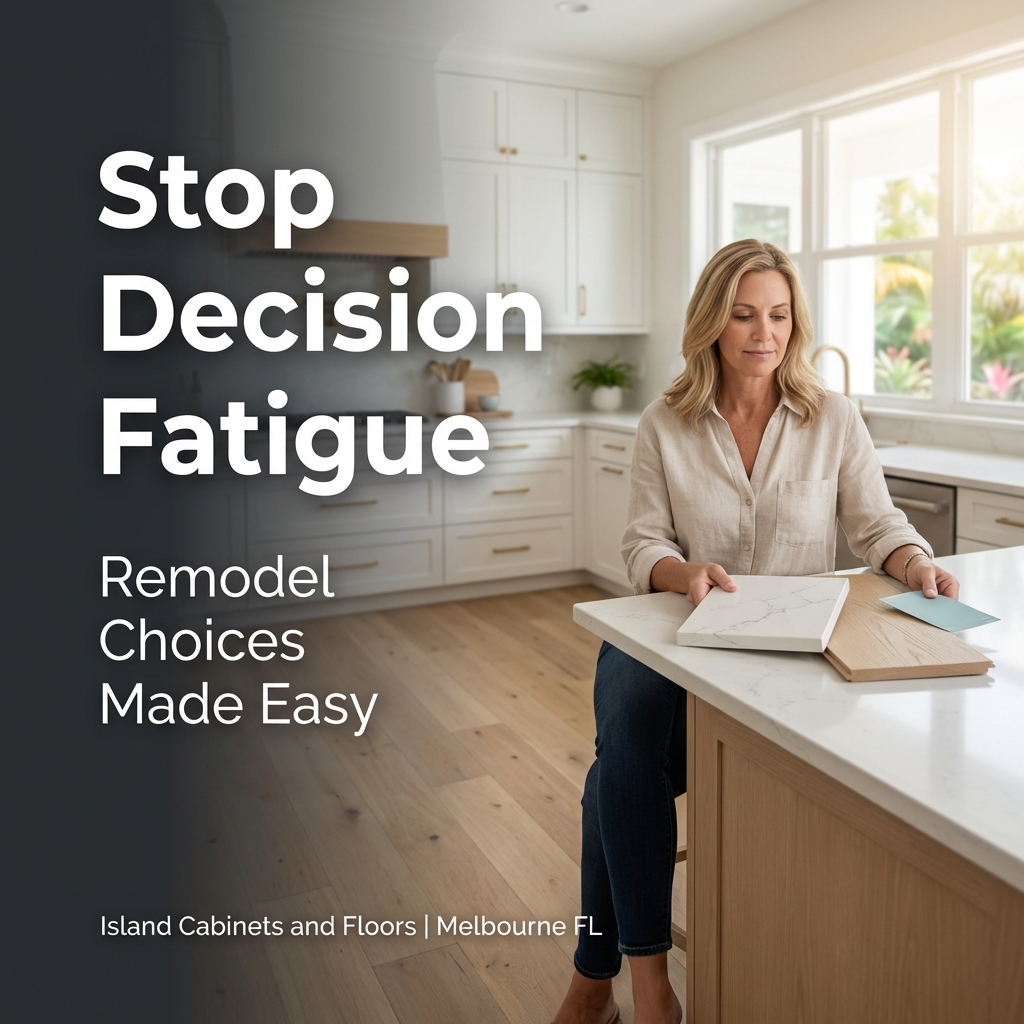
How to Avoid Decision Fatigue During a Home Remodel
How to Avoid Decision Fatigue During a Home Remodel
Remodeling a kitchen, bathroom, or entire home involves a long series of choices. From cabinet door styles and countertop materials to flooring, hardware, and paint colors, the number of decisions can feel overwhelming. This mental overload is often called decision fatigue, and it can make the process feel more stressful than it needs to be.
This guide explains what decision fatigue is, how it commonly shows up in kitchen and bath remodels, and practical ways to manage it so you can move through your project with more clarity and confidence.
What Is Decision Fatigue in Remodeling?
Decision fatigue happens when your mental energy becomes drained after making many choices over time. In a remodel, this often shows up as:
- Difficulty comparing options that once felt simple
- Feeling impatient or frustrated during design meetings
- Choosing whatever is easiest instead of what truly fits your needs
- Procrastinating on selections, which can slow progress
- Second-guessing choices you already made
Because a remodel involves many interconnected decisions, recognizing these signs early can help you adjust your approach and keep the project moving in a structured way.
Why Remodeling Creates So Many Decisions
A typical kitchen or bathroom project requires decisions in several categories, including:
- Cabinetry: layout, door style, finish, hardware, interior accessories
- Countertops: material, color, edge profile, backsplash coordination
- Flooring: material type, color, plank or tile size, pattern
- Plumbing fixtures: general style and finish (exact installation details should be handled by a professional)
- Lighting fixtures: style and placement planning (electrical work should be performed by licensed professionals)
- Colors and finishes: wall paint, trim, grout, and coordinating metals
Without a plan, it is easy to approach these choices in a random order, revisit the same questions repeatedly, and increase stress. A more structured process can significantly reduce decision fatigue.
Strategy 1: Start With Big-Picture Goals
Before selecting any specific products, it is helpful to define your overall goals for the space. This gives you a filter for future decisions and helps you eliminate options more quickly.
Clarify How You Use the Space
Consider how you currently use your kitchen or bathroom and what you would like to improve. For example, you might want more storage, easier cleaning, or better traffic flow. When you know your priorities, it becomes easier to compare materials and layouts.
Define Your Style Direction
Instead of trying to choose from every style available, identify a general direction such as warm and traditional, clean and modern, or relaxed coastal. A few inspiration photos can be enough to guide decisions about cabinetry, flooring, and countertops without locking you into a rigid theme.
Strategy 2: Limit Choices With a Curated Palette
Having too many options can increase decision fatigue. A curated set of materials and colors can simplify your choices and still leave room for personalization.
Create a Core Material Palette
Many homeowners find it helpful to narrow down to a small group of coordinated elements:
- One or two cabinet finish options
- One primary countertop material and backup alternative
- One flooring material that works across connected areas
- One main metal finish for hardware and fixtures
Once this core palette is defined, smaller decisions like cabinet hardware style or grout color can be made within those boundaries, reducing the number of variables you have to consider.
Use Samples to Compare, Not to Collect
Physical samples are helpful, but too many can become confusing. Try to keep only your top few options for each material. Lay them out together in the space to see how they interact in natural and artificial light, and remove anything that does not fit your goals.
Strategy 3: Follow a Logical Selection Order
Making decisions in a thoughtful sequence can minimize backtracking and second-guessing. While every project is unique, a common order that many homeowners find practical is:
- Cabinet style and finish
- Countertop material and color
- Flooring material and general tone
- Backsplash style and color family
- Hardware and fixture finishes
- Wall and trim paint colors
By starting with the more permanent and visually dominant elements, you give yourself clear parameters for the smaller, more flexible choices that follow.
Strategy 4: Break Decisions Into Manageable Sessions
Trying to finalize every selection in a single day can be mentally exhausting. Short, focused decision sessions can help you think more clearly.
Group Similar Decisions Together
Instead of switching between unrelated categories, dedicate specific appointments or planning sessions to topics such as:
- Cabinet layout and storage features
- Surfaces and finishes (cabinets, countertops, flooring)
- Details and accents (hardware, backsplash, paint)
This structure allows you to stay in one mindset at a time and reduces the mental effort of constantly changing focus.
Set Reasonable Time Limits
It can be helpful to give yourself a defined amount of time to review options, ask questions, and then move toward a decision. Long, open-ended sessions often lead to more fatigue and less clarity.
Strategy 5: Use Checklists and Shortlists
Writing things down can reduce the feeling that you have to remember every detail at once. Simple checklists and shortlists can organize your thoughts and reduce stress.
Create a Selection Checklist
A high-level selection checklist might include:
- Cabinet layout and door style decided
- Cabinet finish and hardware finish selected
- Countertop material and edge profile chosen
- Flooring material and color range confirmed
- Backsplash tile type and general pattern selected
- Paint color family identified
As you check items off, you can see your progress and focus only on the remaining decisions instead of everything at once.
Maintain Shortlists Instead of Endless Options
For each category, aim to narrow down to two or three final candidates. Compare those options directly against your goals and overall palette. This approach can make it easier to reach a decision without feeling rushed.
Strategy 6: Rely on Professional Guidance
Design and product professionals work with cabinetry, countertops, and flooring every day and can often help narrow down the options that best fit your space and priorities.
Ask Focused Questions
To make the most of any design consultation, consider asking questions such as:
- Which materials are typically used for kitchens or baths with similar layouts?
- How do these countertop or flooring options generally perform in everyday use?
- Are there any combinations of materials or finishes that tend to coordinate well?
- What are the key differences between my top two or three choices?
Targeted questions help you get clear, relevant information without having to research every possibility on your own.
Strategy 7: Build in Time for Review, Not Rebuilding
Reviewing your choices can be helpful, but constant revisiting can increase stress. It may be useful to schedule one or two dedicated review points during the design phase.
Use Review Sessions Wisely
During a review session, look at your selections together: cabinets, countertops, flooring, and other finishes. Confirm that they align with your goals and that the overall look and function feel consistent. Adjust where needed, but try to avoid restarting from scratch unless there is a clear reason.
Accept That No Space Has to Be Perfect
Every material and design approach has trade-offs. Instead of searching for a flawless combination, focus on what will serve your household well, fit your preferences, and coordinate comfortably over time.
Strategy 8: Take Breaks From Visual Input
Constantly scrolling through design images and product catalogs can add to decision fatigue. It may help to step away from photos and samples periodically.
Short breaks allow you to return to your selections with a clearer perspective. If you find yourself repeatedly changing your mind after looking at new inspiration, it may be useful to pause and revisit your original goals before adding more options.
Balancing Decisions for a Smoother Remodel Experience
Remodeling a kitchen or bathroom involves many decisions, but those decisions do not have to feel unmanageable. By clarifying your goals, limiting options to a coordinated palette, following a logical selection order, and working in focused sessions, you can reduce decision fatigue and move through the process more comfortably.
If you are planning a kitchen, bath, or flooring remodel in Florida and would like guidance on cabinetry, countertops, and flooring options, you can reach out to Island Cabinets & Floors to discuss your project. For more information or to request a consultation, visit https://islandcabinetsandfloors.com/contact.


