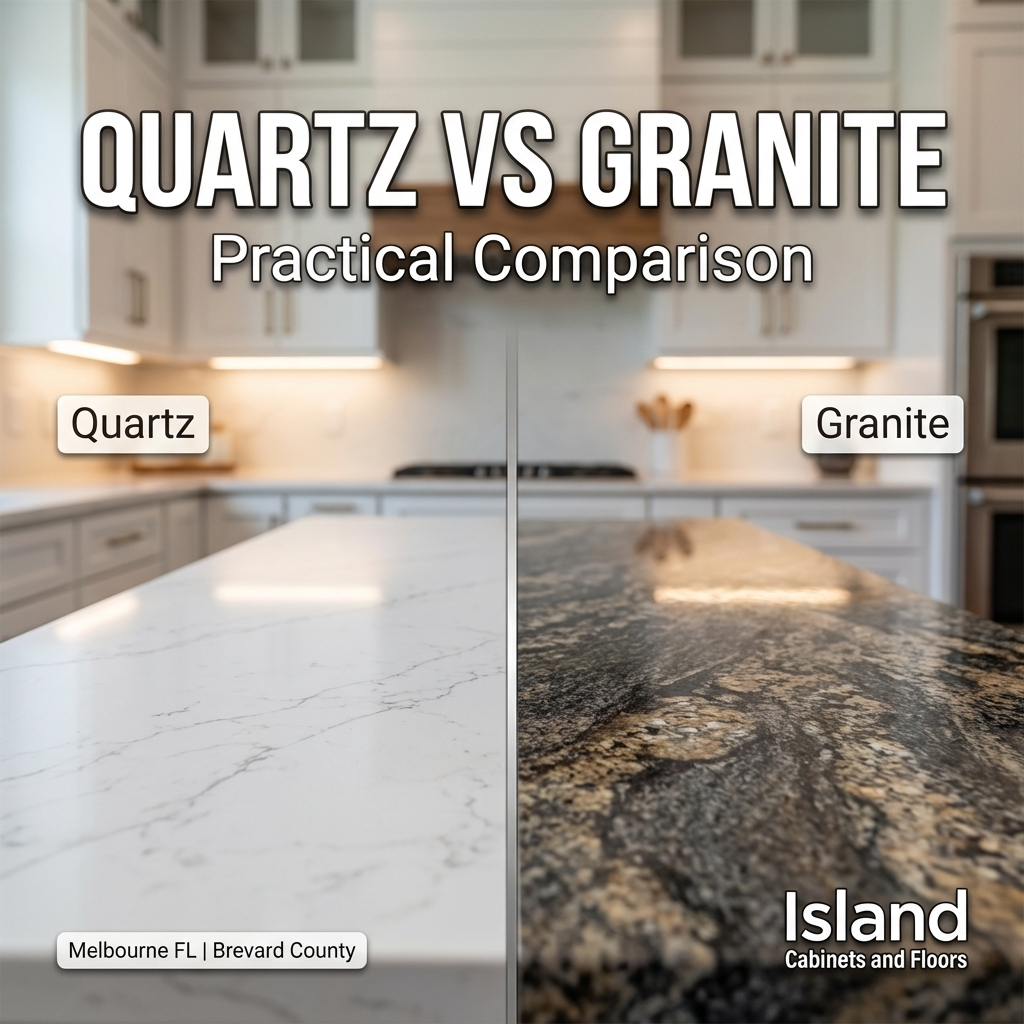
Quartz vs. Granite Countertops: A Practical Overview
Quartz vs. Granite Countertops: A Practical Overview
Choosing between quartz and granite countertops is a common decision in kitchen and bathroom projects. Both are durable, attractive materials, but they differ in composition, performance, and maintenance needs. Understanding these differences can help you select a surface that supports your household's routines and design goals.
What Is Quartz?
Quartz countertops are an engineered stone product. Manufacturers combine crushed natural quartz with resins, pigments, and other additives to form a solid, nonporous slab.
Key characteristics of quartz
- Engineered material: Typically around 90–95% ground quartz with binding resins and colorants.
- Nonporous surface: Designed so liquids do not easily penetrate the material.
- Consistent appearance: Patterns and colors tend to be uniform from slab to slab.
- Wide color range: Available in solid colors, marble-look patterns, concrete-look styles, and more.
Because quartz is manufactured, it is often used where a specific, repeatable look is desired, such as matching multiple countertop areas or creating a cohesive style between kitchen and bath spaces.
What Is Granite?
Granite countertops are made from natural stone quarried in large blocks, cut into slabs, and finished to a smooth, polished, honed, or textured surface.
Key characteristics of granite
- Natural stone: Formed naturally in the earth, with minerals such as quartz, feldspar, and mica.
- Porous surface: The stone contains tiny pores that can absorb liquids without proper sealing.
- Unique patterns: Each slab has its own veining, movement, and color variations.
- Natural color palette: Often features earth tones, blacks, whites, blues, and greens, with distinctive mineral flecks.
Granite is often chosen by homeowners who prefer a natural, one-of-a-kind surface and do not mind some pattern variation between slabs.
Durability and Everyday Performance
Both quartz and granite are considered durable countertop choices. However, they behave differently in response to heat, stains, and impacts.
Resistance to scratching and chips
Quartz and granite are both quite hard materials. Under typical household use, many minor abrasions may be avoided by using cutting boards and handling heavy cookware carefully. However, any stone surface can chip or scratch if subjected to strong impact or sharp objects.
Stain resistance
- Quartz: The nonporous surface is designed to resist common household stains when spills are wiped up in a reasonable time. Certain chemicals, dyes, or strong cleaners may affect the finish, so manufacturer care guidelines are important.
- Granite: Properly sealed granite can resist many everyday stains. Without appropriate sealing and maintenance, oils, wine, coffee, and other liquids may be more likely to penetrate the surface and cause discoloration.
Heat resistance
- Quartz: Quartz can tolerate typical room and moderate surface temperatures, but high heat, such as hot pots or pans taken directly from an oven or cooktop, may damage the resin component. Trivets or heat pads are generally recommended.
- Granite: Granite is naturally heat tolerant to a degree, but sudden temperature changes or extreme heat can still cause damage in some situations. Using trivets or heat pads is a cautious practice here as well.
Maintenance and Cleaning
Maintenance is a major factor when comparing quartz vs. granite. Understanding routine care can help you choose a surface that fits your preferred level of upkeep.
Daily cleaning
- Quartz: Usually cleaned with a soft cloth or sponge and a mild, nonabrasive cleaner suitable for engineered stone. Harsh chemicals, abrasive pads, and high-pH or low-pH cleaners can affect the finish, depending on the specific product.
- Granite: Commonly cleaned with a soft cloth and a gentle cleaner formulated for natural stone. Avoiding abrasive tools and harsh chemicals helps maintain the sealer and finish.
Longer-term maintenance
- Quartz: Generally does not require sealing because it is manufactured to be nonporous. Maintenance usually focuses on regular cleaning and following the manufacturer's care instructions.
- Granite: Typically benefits from periodic resealing. The frequency can depend on the type of granite, the sealer used, and the level of use. Many homeowners perform simple water-drop tests or consult with professionals to determine when resealing may be appropriate.
For both materials, it is useful to clean spills promptly and avoid harsh chemicals, abrasive tools, and prolonged exposure to strong cleaners.
Appearance and Design Flexibility
Visual style is often the deciding factor between quartz and granite. Each offers distinct design advantages.
Quartz design options
- Consistent patterns: Engineered quartz can provide uniform color and veining, which may be helpful when you want a predictable look across large or multiple surfaces.
- Marble and concrete looks: Many quartz lines are designed to resemble marble or concrete, offering the look of those materials with the performance characteristics of quartz.
- Contemporary palettes: Options include bright whites, soft grays, charcoal tones, and more, which can work well in modern or minimalist spaces.
Granite design options
- Natural variation: Each granite slab is unique, with its own movement, flecks, and mineral patterns. This can create a strong focal point on an island or main counter run.
- Depth and texture: Many granites have a sense of depth when polished, and honed or leathered finishes can add a tactile quality.
- Classic appeal: Granite has been used in kitchens and baths for many years and often fits traditional, transitional, and eclectic styles.
Because granite slabs vary, in-person slab selection is often used to ensure the specific stone matches your expectations. Quartz samples tend to be more representative of the final installed look.
Installation and Project Considerations
Quartz and granite are both heavy, rigid materials that require professional fabrication and installation.
Structural and support needs
Both materials typically require sturdy cabinetry and appropriate support, especially for large overhangs or extended spans. A qualified professional can evaluate cabinet structure, recommend support solutions, and coordinate any necessary reinforcements.
Seams and layout
- Quartz: Consistent patterns can help seams blend more easily in some designs. Large islands or long runs may still require seams, which are usually planned to minimize visual impact.
- Granite: Natural pattern variation can sometimes make seams more or less visible, depending on how the veining and colors line up. Slab layout planning is important for achieving a cohesive appearance.
In both cases, professional fabricators typically create templates of your space, plan cutouts and edge profiles, and then shape and polish the slabs before installation.
Environmental and Health Considerations
Homeowners sometimes weigh environmental and indoor air quality factors when selecting a countertop.
- Material sourcing: Granite is quarried from natural deposits and transported to fabrication facilities. Quartz uses natural quartz plus resins and pigments manufactured in a factory setting. The specifics vary by brand and quarry.
- Sealers and resins: Granite usually requires stone sealers; quartz contains resins from the manufacturing process. Checking product documentation and technical data sheets can provide more detailed information.
- Indoor air quality: Many countertop products are tested or certified by third-party organizations for emissions. Reviewing certifications and care guides can help you choose products that align with your indoor air quality preferences.
How to Decide: Quartz vs. Granite
There is no universal better option; the right choice depends on your priorities, style, and how you use your kitchen or bath. The checklist below can help organize your thoughts.
Consider quartz if you:
- Prefer a more uniform, predictable pattern or want to closely match multiple countertop areas.
- Favor marble-look or concrete-look designs with relatively low routine maintenance.
- Appreciate a nonporous surface that does not typically require sealing.
- Like contemporary, streamlined color palettes.
Consider granite if you:
- Prefer a natural stone with unique variation from slab to slab.
- Want a strong visual focal point with distinctive veining or mineral movement.
- Are comfortable with periodic sealing and stone-specific care products.
- Gravitate toward classic or traditional kitchen and bath styles.
In some projects, combining materials can be effective as well, such as quartz on main work surfaces and granite or another stone on an island or accent area. A design professional can help evaluate how different materials will interact in the same room.
Working With a Professional for Your Countertop Project
Because countertops influence both function and appearance, many homeowners find it helpful to work with a professional who understands cabinet layouts, flooring transitions, backsplash planning, and material characteristics.
A knowledgeable team can:
- Review how you currently use your kitchen or bath and identify surfaces that see the heaviest activity.
- Explain differences between specific quartz and granite product lines, including edge profiles and finish options.
- Help coordinate countertop choices with cabinetry, flooring, and backsplash materials for a cohesive look.
- Discuss practical details such as overhangs, support needs, and sink or cooktop cutouts.
If you are planning a kitchen or bathroom project in Florida and want informed guidance on quartz or granite countertops, you can contact Island Cabinets & Floors to discuss your goals, review samples, and explore layout options. To request a consultation or ask questions, visit https://islandcabinetsandfloors.com/contact.


